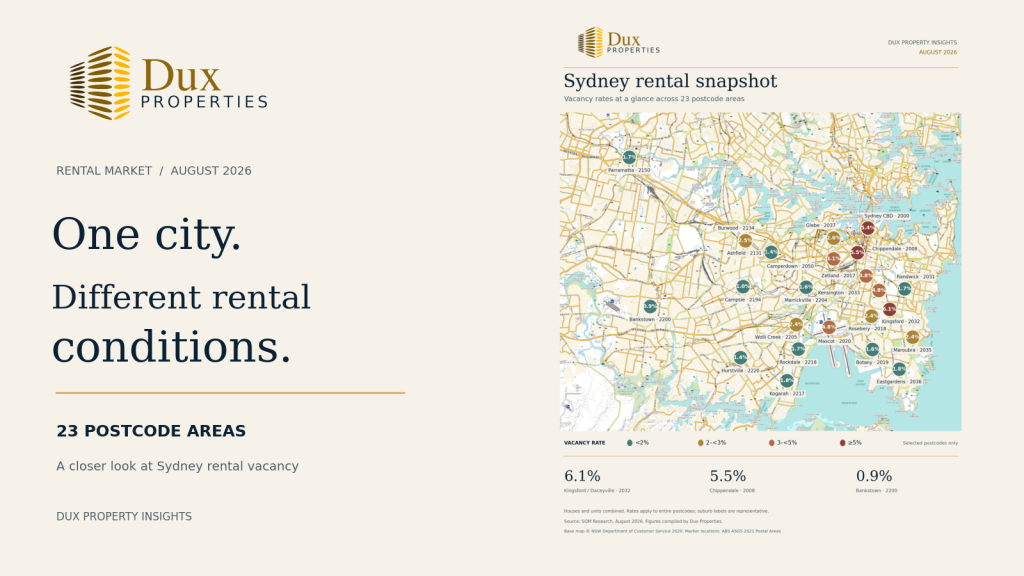

Sydney’s rental market remains competitive, but the latest data shows a material change in tenant choice and a widening difference between houses and units.
For landlords, this does not mean rents are falling everywhere. It means the margin for an inaccurate asking rent is narrowing, especially for apartments with several close substitutes.
Rental availability has increased
SQM Research recorded a Sydney vacancy rate of 1.8% in September, up from 1.7% in August and 1.3% a year earlier. Available rental dwellings increased to 13,331.
The annual movement is more important than the 0.1 percentage-point monthly change. Tenants now have more options than they did a year ago, which can affect enquiry urgency, application conversion and the time needed to secure the right tenant.
The city-wide rent headline hides a split
Sydney’s combined advertised rent rose 0.7% over the 30 days to 12 October, reaching $915.61 per week. House asking rents increased 2.3% to $1,159.28, while unit asking rents declined 1.0% to $749.18.
Because these are asking rents, they should be used as a market signal rather than a guaranteed result. The right comparison is the property’s direct competitive set: similar accommodation, condition, parking, outlook, building facilities and location.
A vacancy calculation should sit beside the asking rent
The practical question is not simply, “What is the highest weekly rent?” It is, “What rent can be achieved within a reasonable leasing period?”
For example, holding out for an additional $25 per week adds $1,300 over a full year if the property remains continuously occupied. One extra vacant week at $750 can remove more than half of that gain before advertising, cleaning or other campaign costs are considered.
The figures will differ for every property, but the discipline is the same: compare the upside from a higher rent with the downside from a longer vacancy.
What landlords should monitor during a campaign
- Directly comparable active listings and recent leased evidence.
- Qualified enquiries rather than total portal views.
- Inspection attendance and repeated objections about price or presentation.
- Application volume, quality and proposed start dates.
- Days on market and the cost of each additional vacant week.
- Whether small presentation or maintenance items are reducing conversion.
Termination decisions require a matching evidence trail
NSW’s first mandatory End of Tenancy Survey collected more than 275,000 landlord and agent responses. The government says its Rental Taskforce cross-checks stated termination reasons against rental listing and bond data.
If an owner needs to end a tenancy, the selected statutory ground, supporting documents, notice period and any later re-letting activity should all be consistent. A leasing plan should never be separated from the compliance record that precedes it.
Owner Takeaway
Sydney’s vacancy rate rose to 1.8% in September. Over the 30 days to 12 October, unit asking rents fell 1.0% while house asking rents rose 2.3%. Review each property against current local competition, price for the best achievable result within a reasonable leasing period and treat vacancy as a measurable cost. Keep termination reasons and supporting evidence aligned with what happens to the property next.