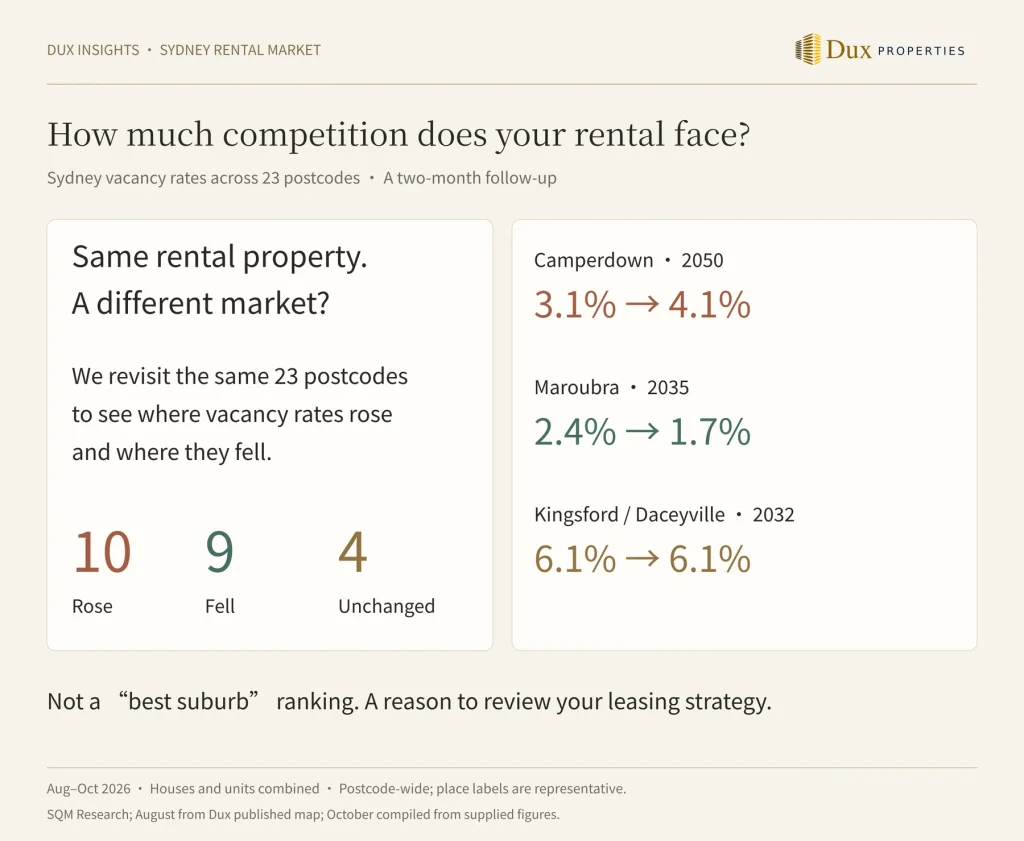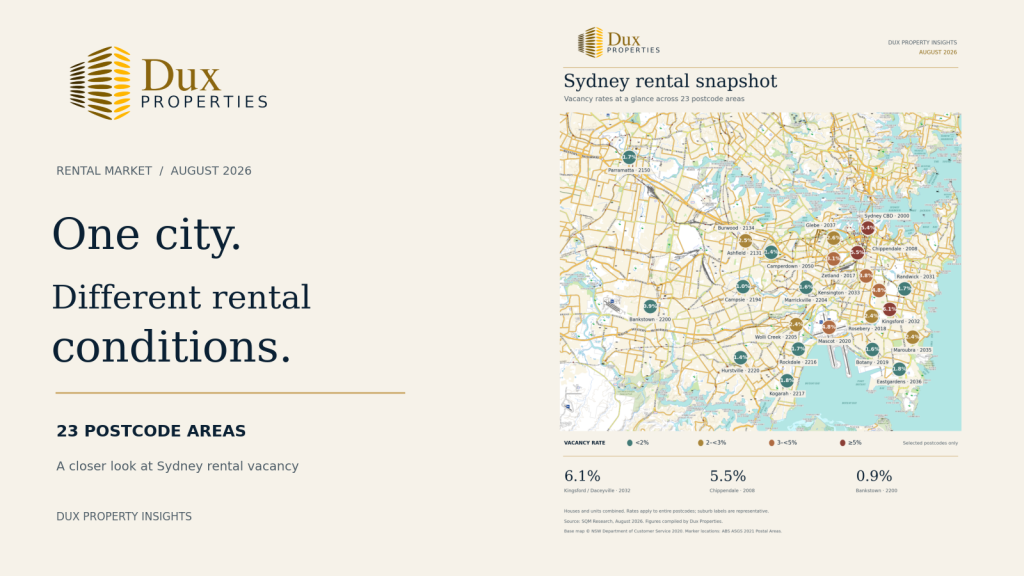

Sydney’s vacancy rate held at 1.8% in October, but SQM Research counted 13,872 vacancies from online rental listings advertised for at least three weeks, about 45% more than a year earlier. The useful owner question is not whether the whole city has “turned”. It is whether a particular property now faces enough direct competition to make an extra week vacant more expensive than a modest rent adjustment.
The headline rate hides a larger stock shift
SQM Research recorded 13,872 Sydney vacancies in October 2026, compared with 13,331 in September and 9,553 in October 2025. The vacancy rate was unchanged from September at 1.8%, up from 1.3% a year earlier.
This gives tenants more choice at a city level, but conditions remain uneven. A renovated apartment near transport can behave differently from an older house at a higher weekly price, even in the same suburb.
Audit the competition, not just the asking rent
Before changing a campaign, compare the property’s true alternatives: similar bedroom count, parking, condition, building quality, transport access and available date. Then track:
- enquiry volume and quality in the first 72 hours;
- inspection attendance;
- applications relative to inspections;
- days on market against direct competitors; and
- the total cost of vacancy, presentation and any rent adjustment.
A higher advertised rent is not a better result if it creates a longer vacancy. Equally, a city-wide increase in vacant stock is not a reason to discount a well-positioned property automatically.
What does one vacant week cost?
For illustration, $785 a week for 52 paid weeks brings in $40,820. Waiting one week and then letting at $800 for 51 paid weeks brings in $40,800 over the same 52-week period. This compares gross rent only and assumes no further vacancy, costs or changes in rent. It is a decision tool for a new listing, not a prediction or advice to change an existing tenancy.
Presentation can improve the campaign
When tenants have more alternatives, accurate photography, clear inclusions, prompt inspection access and a well-presented property can influence both speed and applicant quality. Owners should treat small maintenance items and campaign friction as part of the pricing decision, not as separate issues.
Owner Takeaway
Use the 1.8% vacancy rate as context, not a property valuation. Review the first week of enquiry against comparable live listings, calculate the dollar cost of an additional vacant week and adjust price or presentation only where the evidence supports it. The objective is the best achievable net result, not the highest advertised weekly number.